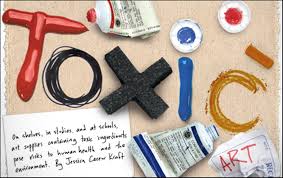
Not All Art Materials Are Safe

Art materials such as crayons, watercolors, paints, are used by people of all ages. They can bring out your creativity and they are fun to use. But not all art materials are safe especially for children. There are some chemicals and toxins found in these materials that can potentially harm ones health. They can cause slight to major health problems. This is especially true when these materials are used in a long period of time, ingested or even inhaled. Remember that there are laws and regulations that are mandated to protect its users. Manufacturers are required to properly label the product. It should include the production and expiration date including when the last review of the ingredients was performed. Manufactures should be responsible enough to make their consumers aware of the potential risk when handling these art materials. They should include in their label the health risks associated with use. As a user we should learn to use these materials in a responsible and careful way. We should always supervise our children when we give this to them for use. Reading labels and knowing the different ingredients used including the possible effects to our health is important.  Let’s be alert for any accident and we should be prompt enough to treat them. Going to the nearest hospital during serious cases is important.

Painting and spray painting: Hazards and protective measures

An essential prerequisite for the quality of the coating is an appropriate pretreatment of the workpieces. Depending on the type of coating material and the condition of the workpieces, it may be necessary to clean, degrease, remove paint, stain, filler, and sand before coating.

Hazardous substances are often used in this work. As with coating materials, the measures for the safety and health protection of employees must be determined in the risk assessment according to the type of work process and the substance and specified in the operating instructions. itv7 horse racing online

Cleaning, degreasing and stripping

Solvents or aqueous cleaners are used for cleaning, degreasing and stripping. Typical hazards when using solvents are skin degreasing, inhalation of harmful vapors and fire hazard.

The workplace limit values ​​must also be complied with in accordance with the state of the art. In practice, long-term manual work is then carried out with suction and ventilation or the solvent is used in a closed system.

The aqueous cleaners are a type of detergent. They have the advantage that they do not release solvent vapors and do not cause a fire hazard, but they are usually irritating and the concentrate is usually corrosive. In addition to degreasing the skin, they can also lead to irritation and chemical burns. If there is a risk of splashing, there is a risk of eye burns. In addition, depending on the temperature, there is also the risk of scalding from the hot cleaner or burns from heated workpieces. In some cases, with extremely dirty workpieces or when stripping paint, the cleaner can also be blasted onto the workpiece as steam under high pressure. While cleaning, you can check itv7 horse racing online if you are into betting.

Pickling

If workpieces such as stainless steel or non-ferrous metals do not have sufficient adhesion for the coating, they are pickled. As a rule, these pickles are caustic, sometimes caustic and poisonous liquids.

For large areas and in industrial production, they are used in the immersion process, in craft and for individual workpieces, stains are often applied with a brush.

In general, there is an increased risk of skin and eye burns, in addition, in the case of toxic stains, skin contact, ingestion or inhalation of vapors can result in dangerous poisoning.

Concealed Dangers in Art Class

When you hear of the phrase Art Class, you can easily relate this to pupils drawing, painting, sculpturing and many more. It has an atmosphere of creativity and enthusiasm to create something beautiful. Yet, despite the fun and excitement in this class many are unaware of the potential danger in this types of class. This is especially true to young children.
 
Most of the time the perils that exist in an art class are ignored. The reasons are simple, some are unaware of the health hazards. Some to not practice and understand safety measures that come when handling these materials.
 
Before entering an art class the teacher and students should be lectured on the proper handling of Art materials. The teacher should be well trained to handle emergencies. Students should be well supervised when handling these materials to avoid accidents.

Who are More at Risk to Hazardous Art Materials?

Both children and adults are fond of arts and crafts. However the some materials we use in art are harmful. Without us knowing there are plenty of art products that contain toxic materials that is hazardous to one’s health.

Children below 12 years old are more at risk for exposure to these harmful elements. This is because children of this age are very curious. The colorful, attractive shape and fragrant smell makes it very tempting to taste. When ingested they are at risk for complications and even death. They cannot handle the effects of it because their body are small and their vital organs are still underdeveloped.

Children who are older are also at risk when they handle this materials improperly. Some older children intentionally abuse these materials. Materials such as glue, paint and solvents have an addicting smell which can lead to abuse. Many art materials have addicting smell thus some use this to get high.

Other groups  who are also potentially at risk are those who have visual and hearing problems, those who have physical disabilities and those who have respiratory diseases such as asthma and COPD.

Hazards and risks of gaming

Computer and video games increasingly referred to by the English term “gaming”, are a popular pastime of children, adolescents, and young adults. The latest target group for the games industry are very young children who have an amazing affinity for tablet computers even in kindergarten. This is not without cause for concern, because the youngest in particular are very susceptible to hidden costs and unsuitable or child welfare content.

How can you judge which games are suitable?

Computer and video games and online gaming such as 918kiss Malaysia can harm children and adolescents. The glorification of violence, for example through so-called “first-person shooters” and the not inconsiderable addiction potential of games are risks to be taken seriously.

On the other hand, gaming can be recommended from an educational point of view; some games provide the basics for the later acquisition of technical and communication skills or are suitable for language acquisition.

 What types of games are there and what hazards do they pose?

The classic gaming genres include jump & run games. Here the character has to be controlled by running and jumping movements through the respective game segment. Similar to racing games, they are generally harmless.

Fighting games or beat them ups are usually brutal and not suitable for children and young people. Shooters/first-person shooters should be absolutely taboo. Here the player has to reach a certain goal and fight his way there with firearms. The pictures shown are sometimes very detailed and can disturb especially younger children.

With children and adolescents, it is therefore essential to ensure that the playing times do not get out of hand. Depending on the age, a playing time of 20 to 120 minutes per day is recommended as the maximum value.

What should you watch out for as an adult?

Make sure that the provider has all legally relevant information ready. Are the terms and conditions understandable?

Browser games and sports often require registration. Enter as little information as possible in registration forms. Check the privacy policy. Use secure passwords and do not pass them on to third parties.

For game subscriptions, check the terms of use and look out for hidden additional costs. Even offers in which players can put together better equipment with apparently small amounts are often cost traps that children feel naive about.

The Resurgence of Art

The pandemic has caused drastic inconveniences to millions of people all other the world. Many people have been forced to stay home, and so has led to reaching the tipping point to loneliness and isolation to many.

Despite this, many great things has happened because of these inconveniences..  Families have been closer, friends dearer, and most importantly, the re-emergence of art. People have been developing new hobbies and interests. Some have gone into baking, some music – others, painting.

People have been more open to embracing new art styles and sharing them with each other through social media platforms. sharing their thoughts and well wishes on the artist and the art itself.

Toxins and Other Health Hazards in Art Materials

Art is fun however there may be health hazards associated when we use some art materials. Many art materials contain toxins that are harmful to people.

Toxic Substances in Art – Toxic metals in art materials

We may be unaware of this. We must protect ourselves especially the most vulnerable from these hazardous materials. We should be aware of the potential threat it may cause to our bodies. Before using these materials, it’s important to read the label. We should also follow safety guidelines when using the materials. After use, we should also practice proper labeling, storage, and disposal. In case of accidents, we should immediately seek medical help and advice.

This website has no cookies. It collects only basic data. More at the Privacy Policy page.
𐌢